
Lake Anna is one of the most popular freshwater fishing spots in Virginia, and for beginners, it can be both exciting and a little overwhelming. The lake is big, there are a lot of docks and coves, and depending on where you fish, the water can look completely different from one area to the next.
The good news is that you do not need a complicated setup to start fishing Lake Anna. If you bring a basic spinning rod, a few proven baits, and a simple plan for where to cast, you can have a solid day targeting bass, crappie, bluegill, catfish, and even striped bass.
This guide breaks down the best fish to target at Lake Anna, the easiest baits and lures to use, and the best beginner-friendly places to start.
Is Lake Anna Good for Beginner Fishing?
Yes. Lake Anna is a good lake for beginner fishing because it has multiple fish species, plenty of shoreline cover, docks, points, coves, and areas where you can fish from a boat, kayak, or the bank.
For your first Lake Anna trip, a simple setup would be:
- A 6'6" to 7' medium spinning rod
- 8–12 lb monofilament or fluorocarbon line
- Soft plastic worms
- Spinnerbaits
- Small crankbaits
- Live worms or minnows
- Small hooks and bobbers for panfish
- A basic tackle box with pliers, extra hooks, weights, and line
Where to start: If you are not sure where to fish, look for docks, rocky banks, shaded pockets, laydowns, grass edges, points, and areas where shallow water drops into deeper water. Fish use all of these as holding and feeding spots.
What Fish Can You Catch at Lake Anna?
Lake Anna has several popular freshwater fish species. The main ones beginners are likely to target include largemouth bass, striped bass, hybrid striped bass, black crappie, bluegill, and catfish.
| Fish Species | Beginner Friendly? | Best Baits and Lures |
|---|---|---|
| Largemouth bass | Yes | Texas rigs, Senkos, spinnerbaits, crankbaits |
| Striped bass | Medium | Swimbaits, spoons, live bait |
| Hybrid striped bass | Medium | Swimbaits, jigging spoons, live bait |
| Black crappie | Yes | Small jigs, minnows, light tackle |
| Bluegill | Very easy | Worms, crickets, small hooks, bobbers |
| Catfish | Yes | Cut bait, worms, stink bait, bottom rigs |
For most beginners, largemouth bass, bluegill, crappie, and catfish are the easiest fish to start with. Striped bass and hybrid striped bass can be a little trickier because they often move around more and may require deeper water, electronics, or more specific timing.
Best Beginner Setup for Fishing Lake Anna
If you only want to bring one rod to Lake Anna, start with a medium spinning combo. This setup is simple enough for beginners but still useful for a lot of different fishing situations — you can throw a Texas rig for bass, use worms under a bobber for bluegill, or tie on a small jig for crappie.
| Gear | Beginner Recommendation |
|---|---|
| Rod | 6'6" to 7' medium spinning rod |
| Reel | 2500 or 3000 size spinning reel |
| Line | 8–12 lb mono or fluorocarbon |
| Hooks | #6 to #10 for panfish, 3/0 or 4/0 for bass worms |
| Weights | Split shot, bullet weights, and small sinkers |
| Lures | Soft plastics, spinnerbaits, crankbaits, small jigs |
| Tools | Pliers, line cutters, tackle box, fish grips |

Ugly Stik GX2 Spinning Combo
The most recommended beginner spinning combo for freshwater fishing. The GX2 includes a 6'6" medium rod and a matching spinning reel — the right size for bass, crappie, and panfish at Lake Anna. It's built from graphite and fiberglass composite, which makes it sensitive enough to feel bites but durable enough to handle years of use. The drag is smooth and reliable, and the rod is nearly impossible to break under normal fishing pressure.
- 6'6" medium — right size for most Lake Anna situations
- Spinning setup is forgiving and easy for beginners to use
- Graphite/fiberglass composite gives sensitivity and durability
- Works for bass, crappie, bluegill, and smaller catfish
Best Baits and Lures for Lake Anna
You do not need a giant tackle box to catch fish at Lake Anna. Start with a few proven options that cover different situations.
1. Soft Plastic Worms
Soft plastic worms are one of the best beginner bass baits for Lake Anna. You can fish them slowly around docks, wood, grass, rocks, and shaded banks. A Texas rig is usually the easiest way to fish a worm around cover because it is mostly weedless and does not get snagged as easily.
Good beginner options include 5-inch stick worms, trick worms, ribbon tail worms, and finesse worms. The Gary Yamamoto Senko is the most consistently effective option — it catches bass in almost any condition, rigged Texas-style or wacky-style around cover.
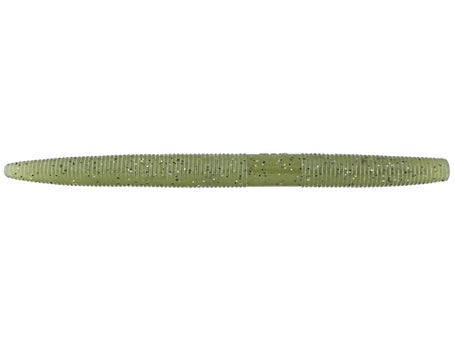
Gary Yamamoto 5" Senko — Green Pumpkin
The most productive beginner bass lure available. The Senko's heavy salt content gives it a slow, irresistible fall that bass can't ignore — especially around docks, laydowns, and grass edges. Fish it wacky-rigged (hook through the center) or Texas-rigged along cover. Green pumpkin is the go-to color for clear and lightly stained water, which covers most Lake Anna conditions.
- Catches bass in any season, depth, or water clarity
- Requires almost no technique — just cast and let it fall
- Works wacky-rigged, Texas-rigged, or weightless
- Salt-impregnated body makes fish hold on longer
2. Spinnerbaits
Spinnerbaits are great for beginners because you can cast them out and reel them back in. They work well around stained water, grass edges, windy banks, and shallow cover. Use a spinnerbait when you want to cover water and find active bass — it lets you search an area quickly rather than sitting in one spot.

BOOYAH Blade Double Willow Spinnerbait — 3/8 oz
The standard beginner spinnerbait. Nearly weedless, easy to fish, and effective in almost every condition. Cast it along grass edges, past dock posts, and across windy banks. Reel it back at a medium pace and let the flash and vibration do the work. Start with white or chartreuse — both work well in Lake Anna's range of water conditions.
- Nearly weedless — casts anywhere without constant hangups
- Double willow blades flash and vibrate through the water column
- Triggers reaction strikes even from inactive bass
- Simple cast-and-retrieve — beginners can fish it effectively on the first cast
3. Crankbaits
Crankbaits are useful around rocks, points, docks, and shallow-to-mid depth areas. For beginners, a small squarebill crankbait is one of the easiest choices because it bounces off cover and triggers reaction bites. A lipless crankbait also works well at Lake Anna — cast it out, let it sink a few feet, then reel it back at a steady pace.
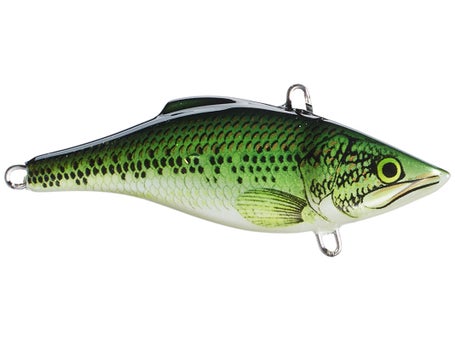
Rapala Rattlin' 05 Lipless Crankbait
A year-round bass producer that requires nothing but a cast and a retrieve. The built-in rattle calls bass from a distance, which is especially useful on Lake Anna's larger stretches of open water, rocks, and points. Red is a classic color in cooler water; chrome or firetiger covers warmer months and clearer conditions.
- Loud rattle draws bass from a distance
- Effective around rocks, points, and open flats
- Simple cast-and-retrieve presentation
- Works year-round — especially good in spring and fall
4. Small Jigs for Crappie
If you want to target crappie, bring small jigs in the 1/32 oz to 1/16 oz range. A small jig under a float is a simple way to fish slowly and keep the bait in the strike zone. Crappie often relate to brush, docks, bridge areas, and deeper cover — so work those spots methodically.
5. Worms and Bobbers for Bluegill
If you just want to catch fish and have fun, live worms under a bobber are hard to beat. Bluegill are one of the easiest fish for beginners, kids, and casual anglers to catch. Use a small hook (#6 to #10), a small piece of worm, and cast near docks, shallow cover, or shaded banks.
6. Bottom Rigs for Catfish
For catfish, use a basic bottom rig with cut bait, worms, or stink bait. Cast near deeper water, creek channels, or areas where fish may be feeding along the bottom. Catfishing can be especially productive in the evening, at night, or near creek arms where deeper water is accessible from shore.
Bass Fishing at Lake Anna for Beginners
Largemouth bass are one of the main reasons anglers fish Lake Anna. If you are new to bass fishing, do not overcomplicate it. Start by targeting visible cover and structure:
- Docks
- Rocky banks
- Laydowns
- Grass edges
- Shaded pockets
- Points
- Drop-offs
- Creek arms
- Brush piles
A simple bass setup for Lake Anna is a Texas rigged worm, a spinnerbait, and a crankbait. Those three lures let you fish slow, cover water quickly, and work different depths without needing a dozen different rods or techniques.
| Situation | Best Lure |
|---|---|
| Around docks | Texas rig or Senko |
| Around rocks | Crankbait |
| Around grass | Spinnerbait or Texas rig |
| Shaded banks | Soft plastic worm |
| Windy banks | Spinnerbait |
| Clear water | Natural-colored soft plastics |
| Stained water | Spinnerbait or darker worms |
Bank fishing tip: Cast parallel to the shoreline instead of always casting straight out. Many bass cruise close to the bank — especially around shade, cover, and baitfish. Casting at an angle and working the bank keeps your bait in the strike zone longer.
Striped Bass and Hybrid Striped Bass at Lake Anna
Lake Anna is also known for striped bass and hybrid striped bass. These fish are different from largemouth bass because they often roam open water and chase baitfish actively. For beginners, stripers can be harder to find from shore, but you can still target them with swimbaits, spoons, live bait, bucktails, and jigs.
The key is finding baitfish. If you see birds diving, fish breaking the surface, or bait flickering near the top, striped bass or hybrids may be nearby. If you are fishing from a boat or kayak, electronics can help a lot. From the bank, focus on points, deeper water access, and areas where baitfish get pushed close to shore.
Crappie Fishing at Lake Anna
Crappie are a great option for beginners because they can be caught on light tackle and simple baits. A light spinning rod with 4–8 lb line is ideal. If you are just starting out, use a small jig or minnow under a bobber and fish slowly around structure.
Good crappie spots at Lake Anna include:
- Docks with shade
- Brush piles
- Standing timber
- Bridge areas
- Deeper cover near creek channels
Bluegill and Panfish at Lake Anna
Bluegill are one of the best fish for beginners at Lake Anna. They are usually easier to catch than bass or stripers, and they are a great way to get comfortable with casting, setting the hook, and handling fish. Cast near docks, shallow cover, grass, and shaded areas.
For bluegill, use #6 to #10 hooks, small pieces of worm or crickets, and a bobber on 4–6 lb light line. If fish keep stealing your bait, use a smaller hook and a smaller piece of worm — bluegill have small mouths and often just peck at larger bait.
Catfishing at Lake Anna
Catfish are another beginner-friendly option at Lake Anna. They are often caught using bait fished on the bottom. A simple catfish rig is a sinker, swivel, 12–18 inch leader, and a hook. Cast it out, let it sit on the bottom, and wait for a bite.
Good catfish baits include nightcrawlers, cut bait, chicken liver, stink bait, and prepared catfish bait. Catfishing can be especially good in the evening or at night, near deeper water or creek arms where catfish move to feed.
Best Places to Start Fishing at Lake Anna
Lake Anna is big, so beginners should avoid randomly fishing open water with no plan. Instead, look for easy, high-percentage areas where fish have a reason to be.
1. Docks
Docks are one of the easiest places to start. They provide shade, structure, and cover for baitfish. Bass, bluegill, and crappie may all use docks at different times. Try casting a Texas rig, small jig, or worm near the edges and shaded sides of docks.
2. Rocky Banks
Rocky shorelines can hold bass, especially when baitfish are nearby. Crankbaits, jigs, and soft plastics all work around rocks. Walk slowly along the bank and cast at angles rather than staying in one spot the whole time.
3. Points
A point is where land sticks out into the water. Points are good because fish can move from shallow to deep water nearby. Try spinnerbaits, crankbaits, Texas rigs, or swimbaits around points.
4. Grass Edges
Submerged vegetation can hold baitfish, bluegill, and bass. Cast along the edge of the grass rather than directly into the thickest part. A Texas rig or spinnerbait works well here.
5. Laydowns and Wood
Fallen trees and downed wood are great fish cover. Bass and panfish often use wood for shade and ambush points. A Texas rig is a good choice here because it is less likely to snag than an open-hook lure.
6. Shaded Pockets
Shade can be important, especially during warm weather. Look for shade from docks, trees, bridges, steep banks, and overhanging cover. Fish often hold tighter to shade when the sun is high overhead.
7. Drop-Offs
A drop-off is where shallow water quickly falls into deeper water. Fish use these areas to move between feeding and resting zones. From the bank, look for steeper shorelines or points that suggest deeper water nearby. From a boat or kayak with a fish finder, drop-offs can be great places to search for suspended fish.
Fishing Lake Anna from the Bank
Bank fishing Lake Anna can be productive, but you need to choose your spots carefully. Since you cannot move around as easily as someone in a boat, focus on areas where fish have a reason to come close to shore.
Good bank fishing targets include:
- Docks along public access areas
- Riprap shorelines
- Shaded banks near deeper water
- Grass edges
- Points
- Shallow coves
For bass from the bank, start with a Texas rig, spinnerbait, or small crankbait. For bluegill, use worms and a bobber. For catfish, use bait on the bottom. One of the biggest bank fishing mistakes is casting straight out every time — instead, cast at angles and work the shoreline so you cover more water.
Kayak Fishing Lake Anna
Lake Anna can also be a good place for kayak fishing, especially if you want to get away from crowded banks and reach docks, coves, grass lines, and points that are harder to access from shore.
For kayak fishing, bring:
- A life jacket (required by law on the water)
- A light anchor or anchor trolley
- Rod holders
- A small tackle box
- Pliers
- Water and sun protection
- A whistle or safety device
From a kayak, beginners should focus on protected coves and calmer areas before trying bigger open-water sections. Wind and boat traffic can make kayak fishing harder on this lake, so safety should come first.
Best Time to Fish Lake Anna
Like most lakes, Lake Anna can fish differently depending on season, weather, water temperature, and boat traffic.
- Early morning can be good for shallow fish — bass and bluegill often feed aggressively in low light
- Evening can be productive as fish move back up to feed
- Cloudy days can keep fish active longer throughout the day
- Windy banks often push baitfish and create feeding opportunities
- Hot sunny afternoons typically push fish toward shade or deeper water
During busy boating seasons (summer weekends especially), early morning and evening are also more comfortable because there is less recreational boat traffic. Less pressure on the water usually means more active fish close to shore.
Beginner Mistakes to Avoid at Lake Anna
Bringing Too Much Tackle
Beginners often bring too much gear and waste time switching lures instead of fishing. Start with a few confidence baits and learn how to use them before adding more.
Ignoring the Bank
Fish are not always far offshore. Docks, shade, rocks, and grass close to the bank can all hold fish. Some of the best spots at Lake Anna are within easy casting distance from shore.
Fishing Too Fast
Many beginners move lures too quickly. With soft plastics and jigs, slow down and let the bait stay near cover. Bass often need a moment to commit to a bait before striking.
Not Checking Regulations
Before fishing Lake Anna, make sure you have the proper Virginia fishing license and check current fishing regulations. Rules can change, and size or creel limits may vary by species. You can check regulations at the Virginia Department of Wildlife Resources website.
Staying in One Bad Spot Too Long
If you are not getting bites, move. Try a different bank, different depth, different lure, or different type of cover. Active fish at Lake Anna are usually not hard to catch — if you're not getting any action after 15–20 minutes, try somewhere else.
What to Bring for a First Lake Anna Fishing Trip
| Item | Why Bring It |
|---|---|
| Medium spinning combo | Works for bass, panfish, and smaller catfish |
| Light spinning combo | Better for crappie and bluegill on 4–6 lb line |
| Texas rig supplies | Great for bass around cover |
| Spinnerbait | Easy search bait for active bass |
| Small crankbait | Good around rocks and shallow cover |
| Worms | Simple bait for bluegill and catfish |
| Small jigs | Useful for crappie and panfish |
| Pliers | Helps remove hooks safely |
| Extra line | Useful if you break off around cover |
| Sunscreen and water | Easy to forget but important on summer days |
You do not need to bring every lure you own. A few simple options are better than a crowded tackle box you do not know how to use. Start with the basics, learn how to fish them in different situations, and add more over time.
Lake Anna Fishing FAQ
Is Lake Anna good for fishing?
Yes. Lake Anna is a popular Virginia fishing lake with opportunities for largemouth bass, striped bass, hybrid striped bass, black crappie, bluegill, catfish, and other freshwater species. It is consistently ranked as one of the top freshwater fishing lakes in Virginia.
What is the best fish to target at Lake Anna for beginners?
For beginners, bluegill, largemouth bass, crappie, and catfish are usually the easiest places to start. Striped bass and hybrid striped bass can be exciting but may be harder to consistently find without a boat or fish finder.
What bait should I use at Lake Anna?
Good beginner baits include soft plastic worms, spinnerbaits, crankbaits, live worms, minnows, small jigs, and cut bait. If you are unsure, bring worms for panfish, Texas rigs for bass, and small jigs for crappie. That covers most situations.
Can you fish Lake Anna from shore?
Yes, you can fish parts of Lake Anna from shore, but access depends on where you are. Look for public access points, parks, and shoreline spots where fishing is allowed. Lake Anna State Park offers one of the most accessible beginner-friendly bank fishing areas on the lake.
What is the best bass lure for Lake Anna?
A Texas rigged worm is one of the best beginner bass lures for Lake Anna because it works around docks, wood, grass, rocks, and other cover without constantly snagging. Spinnerbaits and crankbaits are also solid options when bass are active.
Do you need a fishing license at Lake Anna?
Yes. If you are fishing in Virginia freshwater, you need a valid Virginia fishing license. Make sure you have the proper license and check current state regulations before your trip. Licenses can be purchased online at the Virginia Department of Wildlife Resources website or at most sporting goods stores.
Final tip: Pick a few high-percentage areas — docks, rocky banks, points, grass edges — and fish them slowly and thoroughly before moving on. Once you start learning how fish use Lake Anna's cover, shade, and depth changes, the lake becomes much easier to read and understand.
For other Virginia reservoirs worth a trip, Lake Chesdin offers similar fishing with far less pressure, and Smith Mountain Lake is the state's best striped bass lake.


