
Most Chesapeake Bay fishing guides assume you have a boat. This one doesn't. The Bay has miles of accessible public shoreline, free piers, bridge catwalks, and state park access points where shore-bound anglers consistently catch striped bass, flounder, bluefish, spot, and croaker without ever leaving dry land. If you know the right locations and understand how tidal current moves fish to accessible areas, you have everything you need.
Why the Chesapeake Bay Fishes Great from Shore
The Chesapeake Bay's layout creates natural advantages for shore anglers that don't exist in open ocean environments:
- Structure everywhere: Bridge pilings, channel edges, tributary mouths, rocky points, and rip-rap seawalls — all the habitat that concentrates fish is accessible from shore throughout the Bay system.
- Tidal current does the work: The Bay's tidal range moves bait predictably on every tide. Shore anglers who understand tidal timing fish productive windows without chasing fish around a 4,479-square-mile body of water.
- Fish aren't just offshore: Stripers, bluefish, and flounder all feed aggressively in the shallows during the right conditions. Bridge pilings hold enormous stripers year-round — within casting distance of the catwalk.
- No boat overhead costs: Shore fishing on the Bay costs the price of a license, bait, and gas to the access point. The same fish you're targeting cost hundreds of dollars per trip on a charter boat.
The Best Shore Fishing Locations (No Boat Required)
Maryland Shore Access
Sandy Point State Park (Annapolis, MD)
A large sandy beach with a public pier and boat ramp on the western shore of the Bay. The pier produces spot and croaker all summer, and the beach gets bluefish and stripers during the fall migration. Entrance fee applies during peak season (Memorial Day through Labor Day). Arrive early on weekends — the parking lot fills.
Elk Neck State Park (North East, MD)
A pier and shoreline on the upper Bay near the Susquehanna River mouth. One of the best perch spots in the state during late winter and spring, with mixed species access through summer. Less crowded than Sandy Point and worth the drive for serious anglers.
Matapeake Pier (Stevensville, MD)
A free public pier on the Eastern Shore, just minutes from the Bay Bridge. One of the most productive public piers in the entire Bay system. During spring and fall striper runs, anglers line up along this pier before sunrise. Arrive by 5 AM during peak season to secure a spot. No fee, open year-round.
Flag Ponds Nature Park / Calvert Cliffs Area (Southern MD)
Rocky shoreline and beach access on the western shore with excellent striper and bluefish access during fall. The rocky points create current seams where fish stack up.
Chesapeake Beach (MD)
Town pier and shoreline access, consistently good for spot and croaker all summer, with occasional stripers in fall. A low-key access point that doesn't see the crowds of Sandy Point.
Virginia Shore Access
First Landing State Park (Virginia Beach, VA)
Excellent Bay mouth access at the junction of the Bay and the Atlantic. Redfish and flounder from June through October, with speckled trout on the grass flats nearby. Day use fee required.
Fort Monroe National Monument (Hampton, VA)
A historic federal fort with a long seawall providing some of the best free shore fishing access in the lower Bay. The seawall's rip-rap holds flounder and reds, and fall bluefish blitzes frequently occur within casting distance. Open year-round, no fee.
Buckroe Beach (Hampton, VA)
Public beach with a fishing pier in the lower Bay. Accessible, family-friendly, and productive for mixed species spring through fall.
Messick Point Area (Poquoson, VA)
Shallow flats wading and shore access for speckled trout and flounder. Less known than the state park access points but produces well for anglers willing to wade.
What Gear to Bring for Shore Bay Fishing
Most Bay shore fishing doesn't require specialized heavy surf tackle. A medium-heavy 7–8 ft spinning combo handles the majority of situations — from spot and croaker to bluefish and mid-sized stripers. Save the surf rod for long-distance casting from exposed shoreline.

Penn Battle IV Spinning Combo — 7ft Medium Heavy
The go-to for Bay shore fishing. Penn's Battle IV features full metal body construction, a sealed drag system, and 6+1 bearings that hold up to repeated saltwater use. Use the 3000 or 4000 series for most Bay shore situations. 4,100+ Amazon reviews back it up.
- Full metal body resists flex under heavy striper loads
- Sealed drag handles the power of large Bay fish
- 6+1 bearings for smooth retrieves season after season
- Saltwater-rated components throughout
Line: 20 lb PowerPro braid as your main line with a 25 lb fluorocarbon leader covers everything from spot to large stripers.
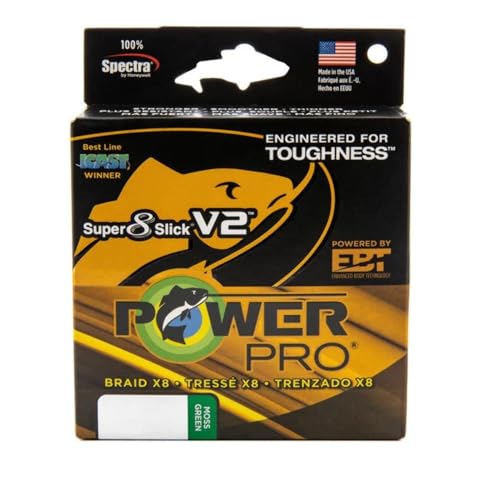
PowerPro Super 8 Slick V2 Braid — 20 lb
Eight-strand construction casts farther and reduces wind knots compared to 4-strand braid. Zero stretch means instant bite detection and hooksets — critical for circle hook fishing where you need to feel the fish pick up the bait before reeling tight.
- 8-strand weave for longer casts from shore
- Zero stretch — feel every pick-up immediately
- Super Slick V2 coating reduces guide friction
For fishing exposed shoreline or bridge catwalks where you need maximum casting distance — particularly during fall striper blitzes when fish are working breaking bait 60+ yards out — step up to a dedicated surf rod.

Ugly Stik Carbon Surf Spinning Rod
When distance matters — fall blitzes, exposed shoreline, bridge catwalks — a 9–10 ft surf rod puts your bait where fish are feeding. The Carbon Surf's clear-tip sensitivity lets you feel bites through wave action while the backbone handles heavy pyramid sinkers and big Bay fish.
- 10 ft length for maximum casting distance from shore
- Clear-tip sensitivity detects subtle bites
- Stainless guides resist saltwater corrosion
- Ugly Stik's near-indestructible durability
Best Rigs for Bay Shore Fishing
Fish-Finder Rig (Most Used)
The fish-finder rig is the Bay shore angler's workhorse. A sliding egg sinker or pyramid sinker on the mainline above a barrel swivel lets line slide freely — the fish can pick up your bait and move without feeling the weight of the sinker, which gives you more time to react and more committed hooksets with circle hooks.
- Setup: 1–2 oz egg or pyramid sinker threaded on mainline → barrel swivel → 24" of 20–30 lb fluorocarbon → 3/0–4/0 circle hook
- Bait: Cut bunker, peeler crab, fresh shrimp, or squid
- Technique: Cast near structure (pilings, rip-rap, channel edges), set the rod in a holder or brace it, and watch the rod tip. When you see it loading steadily, reel tight — don't sweep to set a circle hook.
Carolina Rig (Flounder)
For targeting flounder from shore, a slow bottom-dragging Carolina rig along sandy bottom near channel transitions is the most effective presentation. The slightly lighter sinker (1 oz) allows a slower, more natural drift than a heavy pyramid sinker.
- Setup: 1 oz egg sinker above barrel swivel → 18" of 20 lb fluorocarbon → 2/0–3/0 circle hook
- Bait: Berkley Gulp! shrimp or fresh finger mullet
- Technique: Slow-roll along sandy bottom, pausing every few seconds. Flounder ambush from the bottom — a moving bait triggers strikes that a static soak does not.
Topwater and Lure Fishing
During fall striper migrations, surface blitzes are one of the most exciting experiences in all of Bay fishing. Schools of stripers push bunker to the surface and crash them — visible from shore as spraying baitfish and working birds. When you see a blitz, cast a metal lure or walk-the-dog topwater plug into the middle and hang on.
- Walk-the-dog topwater: Rapala Skitter Walk or Heddon Super Spook in 3–4" size for stripers 20–36"
- Metal lures for distance: 1 oz Kastmaster or Hopkins Shorty — cast into breaking fish and retrieve fast
- Tip: Cast past the edge of the blitz and retrieve through it, not into the center — fish feeding on the perimeter take the bait before the school spooks
Targeting Striped Bass from Shore
Striped bass are the primary draw for Bay shore anglers, but they require more deliberate strategy than spot and croaker fishing. Here's the framework that produces fish from shore:
- Best times: Spring migration (April–May), fall migration (September–November). Summer stripers go deep in the Bay's cooler thermocline and are very difficult from shore in the heat of July and August.
- Best locations from shore: Bridge approaches and rip-rap, tributary mouths where fresh and salt water mix, rocky points that create current seams, jetty tips
- Best natural baits: Peeler crab (spring and fall), fresh bunker chunks (year-round where available), live spot or croaker (fall trophy season)
- Best lures from shore: 1 oz white or chartreuse bucktail jig with a plastic trailer — one of the most versatile and proven striper lures; Rapala X-Rap Saltwater in 4–5" sizes
- Regulations: Always check current Maryland and Virginia slot limits for stripers — these change annually and are strictly enforced. Check the MD DNR and VA DGIF websites at the start of each season.
Tidal timing for stripers: The two hours before and two hours after high tide are the most productive windows for shore striper fishing. Tidal current moves bait through structure, and stripers position themselves at ambush points. Fish those windows first before adjusting your approach.
Targeting Flounder from Shore
Summer flounder are bottom-dwelling ambush predators that hold along sandy-bottom channel edges near structure. Shore access to flounder requires finding spots where deep water transitions to shallow flats within casting range.
- Where to fish: Sandy bottom adjacent to channel drop-offs, pier pilings with sandy edges, grass bed perimeters at high tide
- Best months from shore: May through September
- Technique: Slow-retrieve your bait or artificial along the bottom with frequent pauses. Flounder ambush moving prey and ignore completely static baits.
- Tactic: At low tide, note where grass beds are exposed. At high tide, flounder move to the edges of those same beds to ambush prey — cast to those edges.

Berkley Gulp! Alive Shrimp — 3" Saltwater
The most effective artificial for Bay flounder from shore. Rig on a 1/4 oz jig head and slow-roll along the bottom — the scent dispersion triggers flounder that standard soft plastics miss. Works at night when flounder feed by scent.
- 400x more scent than standard soft plastics
- 3" size is perfect for Bay flounder in the 15–22" range
- Works on jig head or Carolina rig
- Natural and chartreuse colors both produce
Targeting Spot and Croaker (Best for Beginners)
If this is your first time fishing the Bay, start here. Spot and Atlantic croaker are the most forgiving, most abundant, and most consistently catchable species in the entire Bay system during summer. They're excellent for families, kids, and anyone who wants to guarantee catching fish while learning how the Bay works.
- Season: June through September — they're everywhere on the Bay during these months
- No sophisticated water-reading required: Show up at any public pier or sandy beach with a hi-lo rig and fresh shrimp or bloodworm pieces and you will catch fish
- Equipment: Light to medium spinning rod, 10–15 lb line, 1/0 J-hooks on a two-hook hi-lo rig
- Why they matter: Catching spot and croaker teaches you to bait hooks cleanly, manage a bite, set hooks on small fish, and work a rig on the bottom — skills that translate directly to larger Bay species
Bridge Catwalks and Fishing Piers
The Bay's bridges create artificial reef environments that concentrate baitfish and predators year-round. Here's the access situation at the major Bay crossings:
- William Preston Lane Jr. Memorial Bridge (Bay Bridge, MD): The Matapeake Pier on the Eastern Shore provides free public fishing access adjacent to the bridge structure. This is consistently the most productive free public fishing location in the Bay system.
- Elk Neck State Park Pier (North East, MD): Public pier on the upper Bay — good year-round with peak perch and striper action in spring and fall.
- Norfolk/Portsmouth area (VA): Multiple bridge structures with pedestrian access and established fishing areas in the lower Bay.
- Buckroe Beach Pier (Hampton, VA): Lower Bay pier with consistent access for mixed species spring through fall.
Bay Bridge catwalk access (MD): The Chesapeake Bay Bridge itself has historically offered limited catwalk fishing access — but access rules and hours change periodically. Check current rules with the Maryland Transportation Authority (MDTA) before planning a trip to the bridge structure directly.
What to Expect Your First Shore Bay Trip
Managing expectations on your first Bay shore trip sets you up for success rather than frustration. Here's an honest picture:
- If it's summer, target spot and croaker: You will catch fish. This is not a skill-dependent outcome — any angler with a hi-lo rig and bait at any pier will catch these fish throughout summer. Start there.
- Spring and fall stripers require more knowledge: Your first striper from shore may come on the first trip or it may take several. Focus on understanding tidal timing and fishing structure before blaming the spot.
- The Bay's weather changes fast: Check a marine weather forecast (NOAA Marine Forecasts) rather than the regular weather app before your trip. Wind and wave conditions change rapidly and affect both safety and fish activity.
- Tidal flow is the most important variable: The two-hour window of incoming tide and the two-hour window of outgoing tide are the most productive periods for almost every species on the Bay. If nothing is happening at dead high or dead low tide, wait for the water to move.
- Talk to other anglers: Bay fishing has a strong culture of sharing information at public piers. Most anglers are happy to point you toward what's working — you'll learn more in a morning at Matapeake Pier than from any online guide.
If you want tidal water with more shelter and fewer people, the Mattaponi and Pamunkey rivers upstream of the York offer the same tide-driven fishing in protected water that suits a kayak well.

