
If you are looking for a beginner-friendly fishing spot near Richmond, Swift Creek Lake at Pocahontas State Park is one of the best options in Central Virginia. The lake sits inside one of the largest state parks on the East Coast, it is easy to access, and the fishing can be genuinely good for bass, bluegill, crappie, and catfish even if you have never fished before.
What makes Swift Creek Lake stand out for beginners is the combination of a fishing pier, shoreline bank access, calm water, and the kind of wooded cover that holds fish year-round. You do not need a boat to have a good day here. A basic spinning setup and a few simple baits are enough to get started.
This guide covers everything you need to know before fishing Swift Creek Lake — the fish species, gear setup, best spots, park logistics, and the tips that will save you time once you get there.
Overview: Swift Creek Lake and Pocahontas State Park
Pocahontas State Park is located in Chesterfield County, about 20 miles south of downtown Richmond off Route 10. At over 8,100 acres, it is one of the largest state parks in Virginia and one of the most well-developed for outdoor recreation.
Swift Creek Lake is the main fishing lake inside the park, covering roughly 150 acres. The lake is surrounded by hardwood forest, coves, and shoreline structure that makes it a genuinely productive body of water. A second, smaller pond called Beaver Lake is also on the property and offers more casual panfishing access.
Park logistics: Pocahontas State Park charges a day-use fee to enter. The park is open year-round, but hours vary by season — arrive early, especially on summer weekends when the park fills quickly. A Virginia fishing license is required for anglers 16 and older. You can purchase one online at the Virginia Department of Wildlife Resources website before you go.
Gas-powered motors are not allowed on Swift Creek Lake. You can bring electric trolling motors or non-motorized boats (kayaks, canoes, johnboats). The park also rents watercraft during the warmer months if you do not have your own. For most beginners, bank fishing or using the fishing pier is the simplest place to start.
What Fish Can You Catch at Swift Creek Lake?
Swift Creek Lake holds a solid variety of freshwater species. For beginners, bluegill and bass are the most consistent fish to target. Crappie and catfish are also common and do not require advanced technique to catch.
| Species | Beginner Friendly? | Best Baits | Best Season |
|---|---|---|---|
| Largemouth bass | Yes | Texas rigs, spinnerbaits, crankbaits | Spring, Fall |
| Bluegill | Very easy | Worms, crickets, small jigs | Spring through Fall |
| Black crappie | Yes | Small jigs, minnows, bobbers | Spring, early Summer |
| Channel catfish | Yes | Worms, cut bait, stink bait | Summer, Fall |
| Chain pickerel | Medium | Spinnerbaits, jerkbaits, minnows | Late Fall through Winter |
| Yellow perch | Easy | Small jigs, worms, minnows | Winter, early Spring |
Largemouth bass are the most sought-after species in the lake, and there are some quality fish here for a 150-acre body of water. Crappie fishing can be especially good in the spring when they move shallow to spawn. Catfishing in the summer evenings near the dam and creek arms can also be very productive.
Best Setup for Fishing Swift Creek Lake
One rod covers most situations at Swift Creek Lake. A medium spinning combo in the 6'6" to 7' range handles everything from bass to panfish, is easy to use for beginners, and is versatile enough that you do not need to bring multiple rods.
| Gear | Recommendation |
|---|---|
| Rod | 6'6" to 7' medium spinning rod |
| Reel | 2500 or 3000 size spinning reel |
| Line | 8–12 lb monofilament or fluorocarbon |
| Bass hooks | 3/0 or 4/0 EWG for soft plastics |
| Panfish hooks | #6 to #10 for bluegill and crappie |
| Weights | 1/4 oz bullet weights, split shot |
| Lures | Senkos, spinnerbaits, small jigs, crankbaits |

Ugly Stik GX2 Spinning Combo
The most beginner-friendly freshwater combo available. The GX2 comes as a matched 6'6" medium rod and spinning reel — the right size for Swift Creek Lake's mix of bass, crappie, and bluegill. The graphite and fiberglass composite blank gives you enough sensitivity to feel bites without being fragile, and the drag is reliable enough that you won't lose fish due to equipment failure.
- 6'6" medium is the right length for bank fishing and the pier
- Works for every species in Swift Creek Lake
- Smooth drag and durable construction hold up to regular use
- Easy to learn on — forgiving of casting and hookset mistakes
Best Baits and Lures for Swift Creek Lake
Soft Plastic Worms and Senkos
A Texas-rigged soft plastic is the most versatile bass bait at Swift Creek Lake. The lake has plenty of docks, fallen trees, grass edges, and shaded shoreline where bass hold. A 5-inch stick worm or Senko fished slowly around this cover is hard to beat. Use green pumpkin or watermelon in clear water, and darker colors like black and blue in stained water or low light.
Spinnerbaits
A 3/8 oz spinnerbait lets you cover water quickly and find active bass. Cast along the grass edges, past fallen timber, and near points. White and chartreuse are the most reliable colors at Swift Creek Lake because the water can carry some tannin staining from the surrounding forest.
Small Jigs for Crappie
Bring a handful of 1/32 oz to 1/16 oz tube jigs or curly tail jigs in white, chartreuse, or pink. A small jig under a float is one of the simplest and most effective ways to target crappie. Work it slowly around the dock pilings and any submerged structure you can find near the boat launch and pier areas.
Worms and Crickets for Bluegill
Live worms or crickets under a small bobber are the go-to for bluegill. Use a #8 or #10 hook, a small piece of worm, and cast near the pier pilings, shaded shoreline cover, or any overhanging branches you can reach. Bluegill are easy to catch here and are a great option if you have kids along or just want consistent action.
Bottom Rigs for Catfish
For channel catfish, use a basic bottom rig with cut bait or nightcrawlers. Cast near deeper water, creek channels, or the dam area in the evening. Catfish feed most actively after dark, so if you are fishing toward dusk you will often have your best luck targeting them. Check park rules about night fishing access before you go.
Best Fishing Spots at Swift Creek Lake
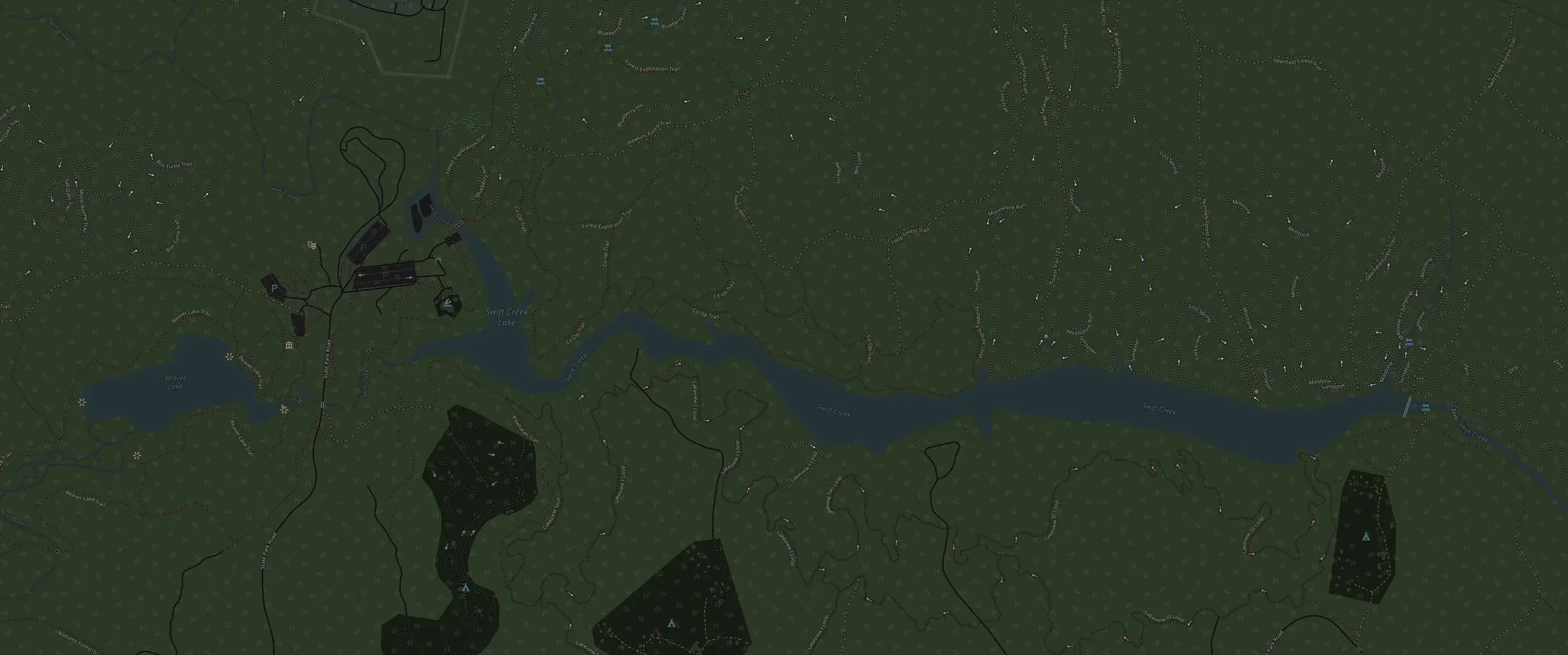
- 1Fishing pier — deeper water without a boat; bass, crappie, catfish and bluegill
- 2Dam area — the deepest water in the lake; catfish and bass in warm months
- 3Creek arms & coves — warm first in spring; crappie and spawning largemouth
- 4Fallen timber & laydowns — work a Texas-rigged plastic slowly around the wood
- 5Beaver Lake — smaller and quieter; easy walk-around panfishing
- PPark lots — Pocahontas State Park entrance fee applies
Swift Creek Lake is a ~150-acre electric-motor-only lake inside Pocahontas State Park. A park entrance fee applies. Pin positions are approximate.
Base map © OpenStreetMap contributors, used under the ODbL. Numbered pins added by HookWake.
1. The Fishing Pier
The fishing pier at Pocahontas State Park is one of the easiest starting points for any skill level. From the pier, you can reach deeper water without needing a boat and can target bass, crappie, catfish, and bluegill all from the same spot. Work the pilings with small jigs for crappie, toss worms under a bobber for panfish, or flip a Texas rig off the end of the pier for bass.
2. The Dam Area
The dam is a reliable spot for catfish and bass, especially in the warmer months. The deeper water near the dam attracts fish that move off the shallows when the sun gets high. A bottom rig with cut bait or nightcrawlers fished tight to the dam is a dependable evening catfish spot.
3. Creek Arms and Coves
Swift Creek Lake has several coves and feeder creek arms along its edges. These areas warm up faster in the spring and hold crappie, bluegill, and largemouth during spawning season. A spinnerbait or shallow crankbait fished through the mouths of these coves in April and May can produce well.
4. Fallen Timber and Shoreline Wood
Because the lake is surrounded by forest, there is often fallen timber and laydowns along the bank. Bass use this wood for cover and ambush points. A Texas-rigged soft plastic fished slowly around laydowns and partially submerged wood is one of the most consistent ways to catch bass at Swift Creek Lake.
5. Beaver Lake
The smaller Beaver Lake on the park property is a more casual option for panfishing. It is easier to walk around and generally less crowded. For beginners or younger anglers who just want to catch fish without much pressure, Beaver Lake is worth a stop. Bluegill, bass, and small catfish can all be found here.
Bank fishing tip: At Swift Creek Lake, the best bank fishing spots are the areas where fallen trees, overhanging branches, or visible structure extend into the water. Walk the bank slowly and cast at different angles rather than fishing straight out into open water. Fish relate to cover, not open flats.
Best Time to Fish Swift Creek Lake
Like most Virginia lakes, Swift Creek Lake fishes best in the early morning and late afternoon — especially from late spring through early fall when the sun gets high and fish move toward shade and deeper water midday.
| Season | Best Species | What to Focus On |
|---|---|---|
| Spring (Mar–May) | Bass, crappie, bluegill | Shallow coves, spawning banks, dock pilings |
| Summer (Jun–Aug) | Bass, catfish, bluegill | Early morning, evening, deeper structure |
| Fall (Sep–Nov) | Bass, catfish, pickerel | Points, drop-offs, grass edges |
| Winter (Dec–Feb) | Perch, pickerel | Slow presentations near deeper structure |
Spring is the single best time to fish Swift Creek Lake for beginner anglers. Bass move into the shallows to spawn, crappie school near structure in the coves, and bluegill become very active near the dock and pier areas. You do not need to be a skilled angler to have a good day on the water in April or May at this lake.
What You Need to Know Before You Go
Virginia Fishing License
Anyone 16 or older fishing at Swift Creek Lake needs a valid Virginia freshwater fishing license. You can purchase a license online at the Virginia Department of Wildlife Resources website, at most local sporting goods stores, or at Walmart. Do not skip this step — rangers do check.
Park Entrance Fee
Pocahontas State Park charges a daily vehicle entrance fee. Fee amounts and hours vary by season, so check the Virginia State Parks website before your trip. If you plan to visit multiple times in a year, a state parks annual pass is worth considering.
No Gas Motors
Gas-powered motors are not permitted on Swift Creek Lake. If you bring your own boat, it must be non-motorized or powered by an electric trolling motor. Boat rentals (kayaks, canoes, rowboats) are typically available at the park's camp store during the warmer months.
Park Rules
Follow all posted rules at the lake, including any bait restrictions (using live fish as bait may be restricted to prevent the introduction of invasive species). Pack out all trash and be respectful of other anglers, especially on the pier and at the boat launch area.
What to Bring
| Item | Why You Need It |
|---|---|
| Virginia fishing license | Required for all anglers 16+ |
| Medium spinning combo | Covers bass, panfish, and catfish |
| Soft plastic worms | Best bass bait for the lake's cover |
| Spinnerbait | Covers water quickly along grass and timber |
| Small jigs | For crappie near the pier and dock areas |
| Live worms | Simple, effective for bluegill and catfish |
| Bobbers and split shot | For panfishing setups |
| Pliers | For hook removal |
| Sunscreen and water | Essential in summer at the exposed pier |
| Entrance fee (cash or card) | Park charges vehicle entry |
Frequently Asked Questions
Is Swift Creek Lake good for beginners?
Yes. Swift Creek Lake is one of the most beginner-friendly fishing spots in the Richmond area. The fishing pier gives you access to deeper water without needing a boat, the species are varied and approachable, and the park setting is safe and well-maintained. It is a great spot for first-time anglers and families.
What fish are in Swift Creek Lake?
Swift Creek Lake holds largemouth bass, bluegill, black crappie, channel catfish, chain pickerel, and yellow perch. Largemouth bass and bluegill are the most commonly caught species. Crappie fishing can be especially productive in the spring near structure and dock pilings.
Do you need a fishing license at Pocahontas State Park?
Yes. A valid Virginia freshwater fishing license is required for all anglers 16 and older. Licenses can be purchased online at the Virginia Department of Wildlife Resources website or at most sporting goods stores. Junior anglers under 16 typically do not need a license in Virginia but should check current regulations.
Can you use a boat at Swift Creek Lake?
Yes, but only non-motorized watercraft or boats with electric trolling motors are permitted. Gas-powered engines are not allowed. The park rents kayaks, canoes, and rowboats during the warmer months if you do not have your own watercraft.
Is there bank fishing access at Pocahontas State Park?
Yes. There is bank fishing access along portions of Swift Creek Lake's shoreline, as well as a fishing pier. Bank access varies by area, so explore the shoreline when you arrive and fish any spots where you can safely reach the water from the bank.
When is the best time to fish Swift Creek Lake?
Spring is the best overall time for beginner anglers — bass and crappie are shallow and aggressive, and bluegill are easy to catch throughout the day. Summer fishing is best early morning and in the evening. Fall can produce quality bass fishing as fish feed heavily before winter.
Final tip: If you are new to fishing and want to have a productive first trip to Swift Creek Lake, start at the pier with a worm under a bobber for bluegill and panfish. Once you are comfortable and getting bites, switch to a Texas rig and work the shoreline cover for bass. That two-step approach gives you action early and lets you build into more technique-driven fishing as the day goes on.


