
Fly fishing has a reputation for being difficult, expensive, and elitist. I've been guiding beginners on mountain streams for eight years, and I'm here to tell you it's none of those things — but only if you start with the right gear and the right expectations. This guide covers everything from buying your first rod to landing your first trout, without the pretension.
What you actually need to start: A complete beginner outfit (rod, reel, line) runs $100–$200. You don't need waders for your first season. A $30 license and some patience cost nothing extra.
Understanding Fly Fishing vs. Conventional Fishing
The key difference is what gets cast. In conventional fishing, the weight of the lure or sinker carries the line. In fly fishing, the weight of the line itself does the casting — the fly weighs almost nothing. This means you're casting the line, and the fly just rides along. Once that clicks mentally, everything about technique makes more sense.
You're also (usually) trying to imitate insects, baitfish, or small creatures that trout and other fish feed on. This means reading the water, matching the hatch, and presenting your fly naturally — drag-free and lifelike. It's more chess than checkers, and that's why fly anglers find it addictive.
Step 1: Choosing Your First Fly Rod & Reel
For trout fishing — which is where 90% of beginners should start — a 9-foot, 5-weight rod is the universal recommendation. It handles small streams to larger rivers, casts dry flies and nymphs equally well, and has enough backbone for the occasional larger fish.
Avoid cheap combo kits under $60 — the fly lines that come with them are often stiff, coiled, and will actively fight your casting. Spend at least $80–$120 on the outfit and you'll have gear that won't hold you back.

Redington Crosswater 5-Weight Fly Rod Outfit
One of the best beginner packages available. Includes the Crosswater rod, pre-spooled reel with RIO Mainstream fly line, leader, and cordura travel case — all matched and ready to fish out of the box.
- Medium-fast action is forgiving for beginners
- Pre-spooled reel with RIO line — no setup needed
- Cordura rod tube included for travel
- Line quality is solid — no upgrade needed
Budget Option: Under $100
If the Redington is out of budget, the Wild Water Standard Fly Fishing Combo is the best we've found under $100. The rod won't win awards for feel, but it teaches casting and lands fish, which is all you need at the start.

Wild Water Standard 5/6 Fly Fishing Combo
9-foot, 4-piece graphite rod with pre-spooled reel, weight-forward floating line, and 9-ft 5x leader. Everything to get on the water today.
- Surprisingly functional for the price
- 4-piece design fits in a carry-on
- Good entry point before committing to the hobby
Orvis Encounter Fly Rod Outfit
Rod, reel, line and leader pre-rigged from a company that has been doing this longer than anyone. The outfit most fly shops hand a first-timer.
Maxcatch Premier Fly Fishing Rod and Reel Combo
A complete 5/6 wt setup at well under the Orvis price. Not a lifetime rod, but plenty to learn to cast and land fish on.
Step 2: Understanding Fly Line, Leader & Tippet
This is where beginners get lost. Here's the simplified breakdown:
- Fly line — thick, colored, floating (usually). This is what you cast. Get a weight-forward floating line labeled WF-5-F for a 5-weight rod.
- Leader — clear monofilament that attaches to the fly line. Usually 7.5–9 ft long, tapers to a fine tip. Pre-made leaders come attached in most combos.
- Tippet — very fine clear mono you tie to the end of the leader and attach the fly to. Size 5x is a good all-purpose starting point.
Tippet rule of thumb: Divide hook size by 3 to get tippet size. Size 14 fly → 4x–5x tippet. Size 18 fly → 6x tippet. When in doubt, 5x handles 80% of trout situations.

RIO Products Tippet 3-Pack (3x, 4x, 5x)
RIO's Fluoroflex Strong tippet is the industry standard. This 3-pack covers every trout fishing scenario you'll encounter as a beginner.
- Excellent knot strength relative to diameter
- UV-resistant formula stays supple longer
- 30-meter spools last a full season
Step 3: Learning to Cast
The fly cast has two parts: the back cast and the forward cast. Imagine your rod as a clock face. Start at 2 o'clock, load the rod by stopping sharply at 10 o'clock (back cast), wait a beat for the line to fully extend behind you, then drive forward stopping at 2 o'clock again. The loop you see in the line is your feedback — tight loops are good, wide loops mean you're rushing.
The #1 beginner mistake is breaking the wrist too much. Keep your wrist firm and let the rod do the work. Practice in a park with a piece of yarn instead of a fly until the motion is natural. Watch for these three drills to fast-track your casting:
- The 10 o'clock stop drill — Focus entirely on stopping the rod dead at 10 o'clock. Hang a shirt on a fence 30 ft away and stop before you'd hit it.
- The slack pickup — Start with 20 ft of line on the ground, lift slowly to load the rod, then execute a normal cast. This builds feel for line weight.
- The reach cast — After the forward cast, reach your rod upstream just before the line lands. This adds 3–4 seconds of drag-free drift and is the single most practical cast for beginners.
Step 4: Reading the Water
Trout are lazy — they sit in current breaks where they can watch food drift by without fighting heavy current. Look for:
- Seams — where fast water meets slow water. This is trout's favorite grocery store aisle.
- Behind boulders — the hydraulic cushion on the downstream side holds fish facing upstream.
- Pool tailouts — where a deep pool shallows before the next riffle. Prime evening feeding spots.
- Undercut banks — fish feel safe tucked under grass and root overhangs. Wade carefully and cast tight to the bank.
Wade carefully: Always face upstream, shuffle your feet sideways rather than crossing them, and use a wading staff on unfamiliar water. More trout are caught wading quietly than rushing to the best-looking spots.
Step 5: Choosing & Presenting Flies
You don't need 200 fly patterns. Start with these five and you'll catch fish everywhere:
| Fly | Type | When to Use | Hook Size |
|---|---|---|---|
| Parachute Adams | Dry fly | Any surface rise, any time | #14–18 |
| Elk Hair Caddis | Dry fly | Evening caddis hatches | #14–16 |
| Hare's Ear Nymph | Nymph | Sub-surface, any season | #12–16 |
| Copper John | Nymph | Fast water, heavily fished rivers | #14–16 |
| Woolly Bugger | Streamer | Big fish, cold water, cloudy days | #4–8 |
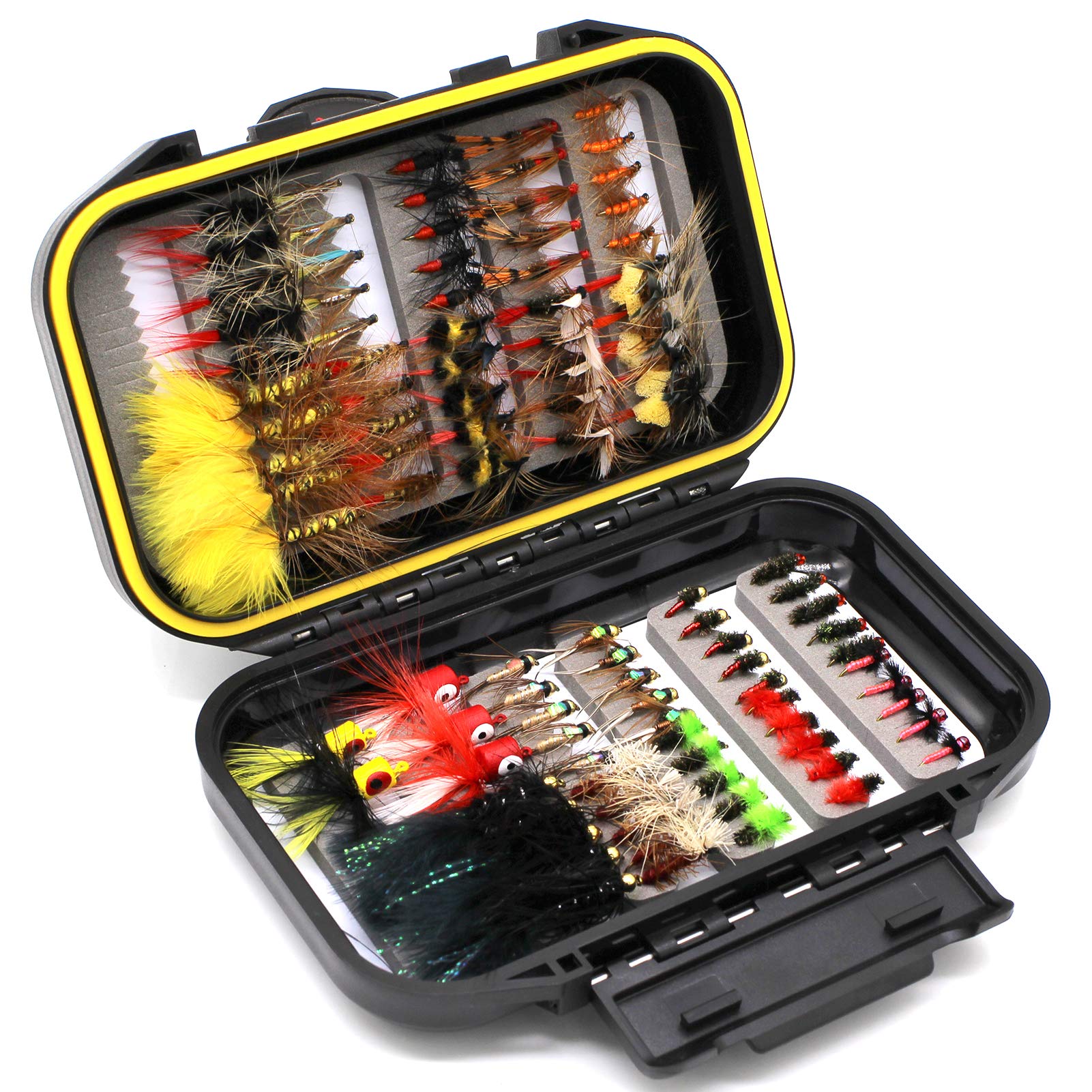
Fly Fishing Flies Assortment Kit (100pcs)
100-piece assortment covering dry flies, nymphs, and streamers in a range of sizes. Great value for beginners who want to experiment with different presentations without breaking the bank.
- Covers surface, mid-water, and deep presentations
- Organized in a reusable fly box
- Sizes appropriate for beginners (not too small)
Do You Need Waders?
Not at first. During summer, fishing wet (shorts and old sneakers) is perfectly comfortable and lets you feel the water temp and current much better than waders. When you're ready to fish cold water or wade deeper, here's what I recommend:

Frogg Toggs Hellbender Stockingfoot Chest Waders
The best waders under $100 we've found. Not as durable as Simms or Patagonia, but they're waterproof, breathable, and will last several seasons with basic care.
- Genuine breathable fabric (not rubber)
- Reinforced seat and knees
- Pair with any wading boot you already own
Your First Day on the Water: What to Expect
You will tangle your line. You will catch your fly in a tree. You will probably spook more fish than you catch. That's fine — it's part of learning. Here's how to make the most of your first session:
- Arrive early (6–8 AM) or late (6–8 PM) — trout are most active at low-light hours
- Approach runs from downstream, stay low, and move slowly
- Start with a nymph under an indicator if dry fly fishing feels overwhelming
- Watch where the fly lands before mending — mending is wasted if the line is already dragging
- When a fish rises, wait one full second before lifting the rod on your hook set
The Complete Beginner Gear Checklist
- 9-foot, 5-weight rod outfit with floating line
- Tippet: 4x, 5x, 6x
- 30 assorted flies (dry flies, nymphs, streamers)
- Forceps / hemostats for removing hooks
- Net (rubber mesh to protect fish)
- Polarized sunglasses to spot fish through glare
- Fishing license for your state
The single best investment: Hire a local guide for one half-day session. You'll learn more in 4 hours with an experienced guide than in a full season of solo trial and error. Most guides charge $150–$250 for a half-day.

