
Saltwater fishing is a different animal than freshwater — the gear needs to resist corrosion, the fish pull harder, and you often need to cover more water. But the fundamentals are the same: find fish, present food, hook up. This guide covers the gear and tactics for inshore fishing (bays, estuaries, surf) which is where 90% of beginners should start before venturing offshore.
Inshore vs. Offshore: This guide focuses on inshore fishing — surf, bay, and estuary fishing within a mile of shore. Offshore fishing (trolling for marlin, tuna, mahi) requires charter boats, specialized gear, and a much bigger budget.
Why Saltwater Gear Is Different
Salt corrodes metal. Drag systems that feel silky smooth in freshwater can freeze up after one saltwater trip if you don't rinse them. Saltwater fish also tend to be larger and faster — a 30 lb redfish will destroy a freshwater combo instantly. Here's what you need to know:
- Sealed or corrosion-resistant reels — look for "saltwater" or "coastal" designations and IPX ratings
- Braided line — 20–30 lb braid with a fluorocarbon leader handles 95% of inshore situations
- Stainless or coated hooks — standard hooks rust within a day in saltwater
- Rinse everything — a freshwater rinse after every trip doubles the lifespan of any reel
The Best Inshore Saltwater Rod & Reel Combo
For inshore fishing targeting redfish, snook, flounder, striped bass, and speckled trout, a medium-heavy 7-foot spinning rod paired with a 3000–4000 series reel is the versatile baseline. Here's what we recommend at each price point:

Penn Battle IV Spinning Combo — 7ft Medium Heavy
Penn has built saltwater reels for over 80 years. The Battle IV features full metal body, sealed drag, and HT-100 carbon fiber drag washers — a reel you'll own for a decade.
- Full metal body resists flex under heavy loads
- 6+1 sealed bearings for smooth retrieves
- Solid graphite rod blank rated for 12–25 lb line
- Comes pre-spooled with 20 lb mono
Premium Option: Shimano Stradic for Saltwater

Shimano Stradic FL 4000 Spinning Reel
The step-up choice for serious inshore anglers. X-Protect water resistance, Hagane body, and an ultra-smooth retrieve that holds up in the toughest conditions.
- X-Protect water resistance for full saltwater use
- Infinity Drive for reduced cranking effort on big fish
- Longer casting distance than most competitors
Essential Saltwater Rigs
Three rigs handle the vast majority of inshore fishing situations. Learn these and you're ready for anything the coast throws at you:
1. Carolina Rig (Bottom Fishing)
A sliding egg sinker above a swivel, with an 18–24" fluorocarbon leader to a hook. Used for flounder, redfish, and drum on sandy and grassy bottoms. The swivel prevents line twist and lets the bait move freely. Use a 1–2 oz sinker in light current, 3–4 oz in strong tidal flow.
2. Popping Cork Rig (Inshore Topwater)
A floating, rattling cork above an 18–24" leader ending in a jig head with a soft plastic shrimp imitation. The cork makes noise on each twitch, attracting fish from distance. Deadly for specks and reds over grass flats.
3. Jig Head + Paddle Tail (Versatile Searching)
A 1/4–1/2 oz jig head with a 4" paddle tail swimbait covers water fast and works for every inshore species. Cast and retrieve with rod tip down, varying the retrieve speed until you find what works. This is the go-to lure when you don't know what the fish are doing.
Building your inshore lure kit: Skip the pre-made kits and buy individual components. Pick up a pack of 1/4 oz jig heads, 4" paddle-tail swimbaits in white and chartreuse, a gold spoon (Johnson Silver Minnow is the classic), and a popping cork rig with shrimp imitations. Total cost runs $20–$30 and you'll have exactly what actually catches fish.
Targeting Species: Where & When
| Species | Best Season | Habitat | Top Lure/Bait |
|---|---|---|---|
| Redfish | Fall (Sept–Nov) | Grass flats, oyster bars | Gold spoon, shrimp |
| Speckled Trout | Spring & Fall | Grass flats, deep channels | Paddle tail, popping cork |
| Flounder | Summer–Fall | Sandy bottom near structure | Gulp shrimp, Carolina rig |
| Striped Bass | Spring & Fall migration | Inlets, beaches, structure | Metal lures, bucktail jigs |
| Snook | Summer (FL coast) | Dock lights, passes | Live pilchards, DOA shrimp |
Surf Fishing: No Boat Required
Surf fishing is the most accessible form of saltwater fishing — just park, walk to the beach, and fish. You don't need a boat or a guide. Here's what changes:
- Longer rod — 10–12 ft surf rod to clear the breaking waves and cast distance
- Heavier weights — 3–6 oz pyramid sinkers to hold bottom in the wash
- Sand spike — stick your rod in the sand to wait for bites without holding it all day
- Fish the sandbars — pompano and stripers patrol the edge between the trough and the outer bar

Ugly Stik Carbon Surf Spinning Rod
Built specifically for surf fishing, the Carbon Surf handles heavy pyramid sinkers and big surf species with ease. Clear-tip sensitivity lets you feel bites through wave action, and it casts heavy rigs with authority.
- Rated for heavy surf rigs and distance casting
- Stainless steel guides resist saltwater corrosion
- Ugly Stik's legendary durability — nearly indestructible
Saltwater Line Setup: What We Run
For inshore spinning gear, we run this exact setup on every rod:
- Main line: 20 lb braided line (PowerPro Super 8 Slick V2 or Sufix 832) — thin diameter casts far and telegraphs bites perfectly
- Shock leader: 24–36" of 20–30 lb fluorocarbon — protects against abrasion from teeth, oysters, and structure
- Connection: FG knot or Alberto knot between braid and fluoro — these don't slip and pass through guides cleanly
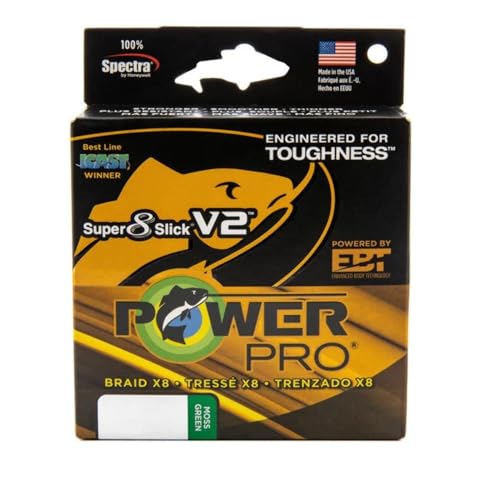
PowerPro Super 8 Slick V2 Braid
PowerPro's upgraded 8-strand construction gives a rounder, tighter braid that casts farther and cuts through wind knots. The Super Slick V2 coating reduces friction for longer casts and smooth retrieves all season long.
- 8-strand weave casts farther than 4-strand braid
- Zero stretch for instant hooksets
- Available in multiple colors and line weights
Post-Trip Gear Maintenance (Don't Skip This)
The single biggest mistake new saltwater anglers make is not rinsing their gear. Salt crystallizes and destroys drag systems, corrodes guides, and seizes bail springs. After every single trip:
- Rinse rod and reel with fresh water — a kitchen faucet or garden hose works fine
- Open the bail and rinse inside the bail mechanism
- Dry with a cloth and leave the reel with the drag loosened
- Apply a drop of reel oil to the line roller every 3–4 trips
Quick rinse kit: Keep a gallon jug of fresh water in your car specifically for post-trip reel rinsing. A 30-second rinse at the ramp has saved more reels than any amount of after-the-fact maintenance.
Complete Inshore Saltwater Gear Checklist
- 7–8 ft medium-heavy spinning combo (3000–4000 series reel)
- 20 lb braid main line with 30 lb fluorocarbon leader
- Jig head assortment (1/8–1/2 oz) + paddle tail swimbaits
- Gold and silver spoons (Nickel-plated Johnson Silver Minnow)
- Topwater plug (MirroLure She Dog or Rapala Skitter Walk)
- Popping cork rig + shrimp imitations
- Quality polarized sunglasses (essential for spotting fish)
- Saltwater fishing license for your state
- Cooler with ice for keeping catch fresh

