
Belle Isle is one of the most unique urban fishing spots in the country. It's a 54-acre island in the middle of the James River in downtown Richmond, connected to the south bank by a pedestrian suspension bridge, and its north-facing rock shoreline gives you casting angles into the deepest water in the Richmond section of the James. If you want to catch a big smallmouth bass, a spring striper, or run into American shad during the April migration — Belle Isle is one of the best public shore-fishing spots in Virginia.
This guide covers everything you need to fish Belle Isle effectively — how to get there, where to fish on the island, what to bring, what to throw, and how to stay safe on the rocks. It's written for anglers who want practical information they can use on their first trip.
Quick answer: Cross the suspension bridge from Tredegar Street, hike to the north side of the island, and fish the deep rocky shoreline that faces the main channel. Throw jerkbaits and swimbaits for smallmouth spring/fall, small shad darts in April, and topwater at dawn in summer. A Virginia freshwater fishing license is required.
Where Is Belle Isle and How to Get There
Belle Isle sits in the middle of the James River in downtown Richmond, directly south of the Tredegar Iron Works and just west of the Manchester Bridge. It's part of the James River Park System and access is free.
The only foot access to the island is via the Belle Isle pedestrian suspension bridge, which hangs beneath the Robert E. Lee Memorial Bridge on the south side of the river. To get to the bridge, park along Tredegar Street or in the surface lots near the American Civil War Museum at Historic Tredegar. Follow the marked path down to the suspension bridge, cross the river (about 5 minutes on foot), and you'll be on the island.
The island itself has hiking paths that loop around most of the shoreline. Total walking time from the parking lot to the productive north-facing fishing rocks is about 15 minutes.
What You Can Catch at Belle Isle
Belle Isle produces a wider variety of fish than most Richmond spots because it sits at the transition point between the rocky non-tidal James upstream and the tidal James downstream. The species below all show up regularly.
| Species | Best Season | Best Technique |
|---|---|---|
| Smallmouth bass | Apr–Jun, Sep–Oct | Tubes, jerkbaits, swimbaits |
| American shad | Mar–Apr | Shad darts, small spoons |
| Striped bass | Apr–May, Oct–Nov | Bucktails, jerkbaits, live bait |
| Rock bass | Apr–Oct | Small jigs, live worms |
| Redbreast sunfish | Apr–Oct | Small hooks with worm or cricket |
| Channel catfish | Year-round | Cut bait, chicken liver |
| Largemouth bass | Spring, Fall | Texas rigs in slower backwater |
Best Fishing Spots on Belle Isle
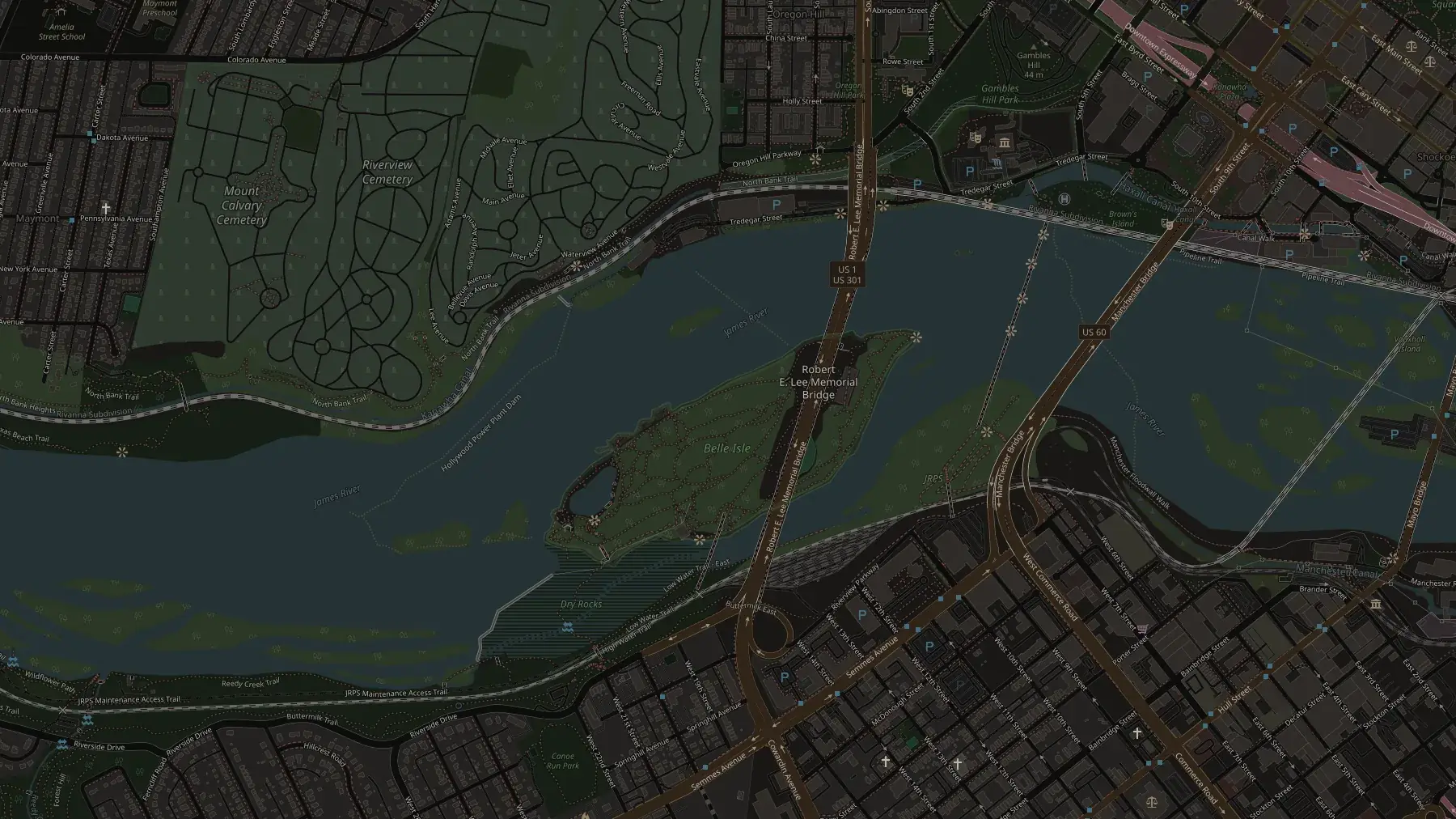
- 1North Rocks — deepest water and strongest current; smallmouth plus spring stripers
- 2East End eddy — where the two channels rejoin; reliable in summer high water
- 3West End — upstream point; the shad spot during the early-April run
- 4South Channel — shallow and calm; rock bass, sunfish and smaller smallmouth
- PTredegar Street parking, then the footbridge under the Lee Bridge
Belle Isle sits mid-river with a fast, deep north channel and a shallow, calm south channel. Reach it on the footbridge hanging beneath the Lee Bridge. Pin positions are approximate.
Base map © OpenStreetMap contributors, used under the ODbL. Numbered pins added by HookWake.
The North Rocks (Main Current)
The single best fishing area on Belle Isle is the rocky shoreline along the north side of the island facing the main current of the James. This is where the water is deepest, the current strongest, and the smallmouth and stripers concentrated. From the paths that loop the island, you can access several rocky points that let you cast directly into the main channel.
Fish this area with jerkbaits or paddle-tail swimbaits worked across the current, letting the bait swing naturally through the seams. In spring the striper run pushes fish through this exact water — anglers regularly hook stripers in the 5–15 lb range from these rocks in April and early May.
The East End (Downstream Point)
The downstream tip of Belle Isle creates a distinct eddy where the two channels of the James rejoin. This eddy holds fish that use the slack water to conserve energy while feeding on prey being pushed off the main current. Cast into the current line and let your bait swing into the eddy. It's a reliable smallmouth spot in summer when higher water pushes fish off the main-current rocks.
The West End (Upstream Point)
The upstream tip of the island is a good option for shad in spring. The rocks and gravel here catch shad running upriver against the current. During peak shad run in early April, cast a small dart or spoon across the current and let it swing back. Shad hit on the swing.
The South Channel (Shallower, Easier)
The narrower south channel between Belle Isle and the mainland is shallower, calmer, and holds a mix of rock bass, redbreast sunfish, and smaller smallmouth. It's a great option for beginners or anglers who don't want to work the exposed north rocks. Fish it with a small tube jig or a live worm on a size 6 hook.
Best Lures for Belle Isle
The lures below cover the main species that Belle Isle produces year-round. Bring a small selection — you don't need a giant tackle box for a productive day on the island.
Green pumpkin tube jig (1/8–1/4 oz). The universal smallmouth lure for the James River. Rig on a jighead and drag along bottom through current seams. See our James River smallmouth guide for more on tube fishing.
Rapala X-Rap or similar jerkbait. The most productive lure at Belle Isle in cool water (March–April, October–November) for both smallmouth and stripers. Cast across current and use a twitch-pause-twitch cadence.
Small shad dart (1/16–1/8 oz). The essential lure for the spring shad run in late March through April. Bright colors — chartreuse, pink, white. Cast across the current and swing back.
3.5" paddle tail swimbait. Green pumpkin or shad pattern. Swims across current seams to trigger active smallmouth and stripers.
1/2 oz bucktail jig. The classic striper lure. Cast into the main channel from the north rocks in April/May, hop it back along the bottom.
Recommended Gear
A single medium-power spinning setup handles almost everything at Belle Isle except heavy striper fishing.
Primary setup: 6'10" to 7' medium-power spinning rod, 2500-size reel, 10 lb braid with a 6–8 lb fluorocarbon leader. This handles smallmouth, shad, and smaller stripers effectively.
Striper backup: If you're targeting stripers specifically in April, upgrade to a 7' medium-heavy spinning rod with a 3000–4000 size reel, 20 lb braid, and 15 lb fluorocarbon leader. Belle Isle stripers can top 20 lbs.

Ugly Stik GX2 Spinning Combo — 7'0" Medium
A durable, versatile combo that handles the range of species you'll encounter at Belle Isle. The rod's medium power is strong enough for stripers up to 10 lbs and sensitive enough for shad and smallmouth. The Ugly Stik's famous durability matters when you're fishing from slippery rocks — this rod will survive being set down carelessly on granite. Spool with 10 lb braid before your first trip.
- Handles smallmouth, stripers, shad, and rock bass
- Durable enough for rocky urban fishing
- Priced under $70 for the complete combo
- Standard workhorse rod for James River anglers
Seasonal Timing for Belle Isle
Spring (March–May) — Peak Season
Spring is when Belle Isle earns its reputation. The shad run kicks off in mid-March and peaks in early April. Stripers push into the same water from late March through early May as they follow shad upriver to spawn. Smallmouth turn on as water warms into the 60s in April. It's the single best time to fish the island — and also the busiest.
Summer (June–August)
Summer smallmouth fishing is best at dawn and dusk. Midday summer trips are tough — high sun, warm water, and heavy park foot traffic all work against you. Bring topwater at first light and expect to be off the water by 9 AM in July and August. Rock bass and sunfish stay active all day and are good for younger anglers.
Fall (September–November)
The second peak. September and October produce heavy smallmouth feeding as fish pack on weight before winter. A fall striper run in October and November brings stripers back into the same rocks where they staged in spring. Jerkbaits and swimbaits both produce.
Winter (December–February)
Slow. Warm winter afternoons (upper 40s+) can produce a few smallmouth in the deepest pools around the island, but most anglers skip Belle Isle in winter.
Safety on Belle Isle
Belle Isle is safe when you respect it, dangerous when you don't. The James River has taken lives every year for as long as records exist, and most incidents on Belle Isle involve people slipping on wet rocks, wading into the current, or getting caught by rising water after upstream rain.
Never wade into the current. The rocks and hydraulics near Belle Isle are Class IV whitewater. Fish from stable dry positions on the shoreline rocks.
Check water levels before you go. The USGS gauge for the James River at Richmond (Locks) will tell you if the river is safe. Below 4 ft is ideal. Above 6 ft, skip the trip.
Watch the rocks after rain. Even a light rain 20 miles upstream can raise the river a foot or two at Belle Isle within hours. If you see the water suddenly rising during your trip, move to higher ground immediately.
Wear grippy footwear. The algae on Belle Isle's rocks is legitimately as slippery as ice. Wading boots with felt or rubber soles are ideal. Hiking boots work in dry conditions. Never fish in flip-flops or smooth-soled sneakers.
The rule locals use: If a rock is wet, assume it's slippery. If a rock is submerged, assume you cannot stand on it safely. Fish from dry, above-water rocks only. This one rule prevents almost every fishing accident on the island.
Fishing License at Belle Isle
Belle Isle sits in the non-tidal section of the James River, so a Virginia freshwater fishing license is all you need. Anglers 16 and older must have a valid license. Purchase online at the Virginia Department of Wildlife Resources website, or in-person at Walmart, Bass Pro Shops, or most sporting goods retailers. Short-term licenses (1-day and 5-day) are available for visitors.
Note that Belle Isle sits very close to the fall line — the boundary between non-tidal and tidal water. If you fish downstream of Mayo Bridge (which is a few hundred yards downstream of Belle Isle), you're in tidal water and need a combined freshwater + saltwater license.
Local Tips
Weekday mornings are the play. Belle Isle gets extremely busy on weekends — runners, cyclists, cliff jumpers, and families all use the island. Weekday mornings before 9 AM or evenings after 5 PM give you the island mostly to yourself.
Bring a small tackle bag, not a full box. The 15-minute hike from parking to the productive rocks makes a heavy tackle box exhausting. A shoulder bag or hip pack with a handful of tubes, a few jerkbaits, some shad darts in spring, and a couple of jigheads covers most trips.
Fish during shad run and stay for stripers. The most productive Belle Isle trips happen in early April when shad and stripers overlap. Fish shad darts in the morning, switch to bucktails and jerkbaits for stripers by mid-morning as the shad school and stripers push in behind them.
Take the trash out. Belle Isle is a public park with limited maintenance. Pack out everything you bring in. Anglers who leave line, hooks, and beer cans behind are the reason regulations tighten over time.
Frequently Asked Questions
Do you need a Virginia fishing license to fish Belle Isle?
Yes. All anglers 16 and older need a valid Virginia freshwater fishing license. Belle Isle is in non-tidal water, so a freshwater license is sufficient.
Can you catch bass at Belle Isle?
Yes — smallmouth bass are the primary bass species at Belle Isle. Occasional largemouth are caught in the slower backwater sections. Best months are April–June and September–October. See our how to catch bass from the bank guide for more on shoreline bass techniques.
Are there catfish at Belle Isle?
Yes, channel catfish are present and can be caught on cut bait or chicken liver fished on the bottom in the slower water sections. Blue catfish are more common downstream in the tidal James — see our Ancarrow's Landing guide for tidal James blue catfish.
What time of year is the shad run at Belle Isle?
American shad run through Belle Isle from mid-March through late April, peaking around the first week of April. Hickory shad tend to run slightly earlier than American shad.
Can I bring my kids to fish at Belle Isle?
Yes, but stick to the calmer south-channel shoreline where the water is slower and the rocks less exposed. Avoid the north rocks with small children — the current is dangerous and the rock scrambles are not appropriate for kids under 8 or so.
Is there parking at Belle Isle?
Yes, free parking is available along Tredegar Street and in the surface lots near the American Civil War Museum at Historic Tredegar. Parking fills quickly on weekends, especially in warm weather — arrive before 9 AM if possible.
The Bottom Line
Belle Isle gives Richmond anglers something rare — a downtown urban fishing spot that produces trophy-class smallmouth, spring stripers, and a legitimate shad run every year. It's free, accessible on foot, and requires no boat. The key to fishing it successfully is picking your season (spring is best), respecting the water, and knowing which rocks to fish. Start with the north-facing rocks near the middle of the island, throw a jerkbait or tube in cool water and a topwater at dawn in summer, and you'll get into fish.
For the full picture of Richmond-area fishing options, see our complete Richmond fishing spots guide and our James River smallmouth bass guide.


